
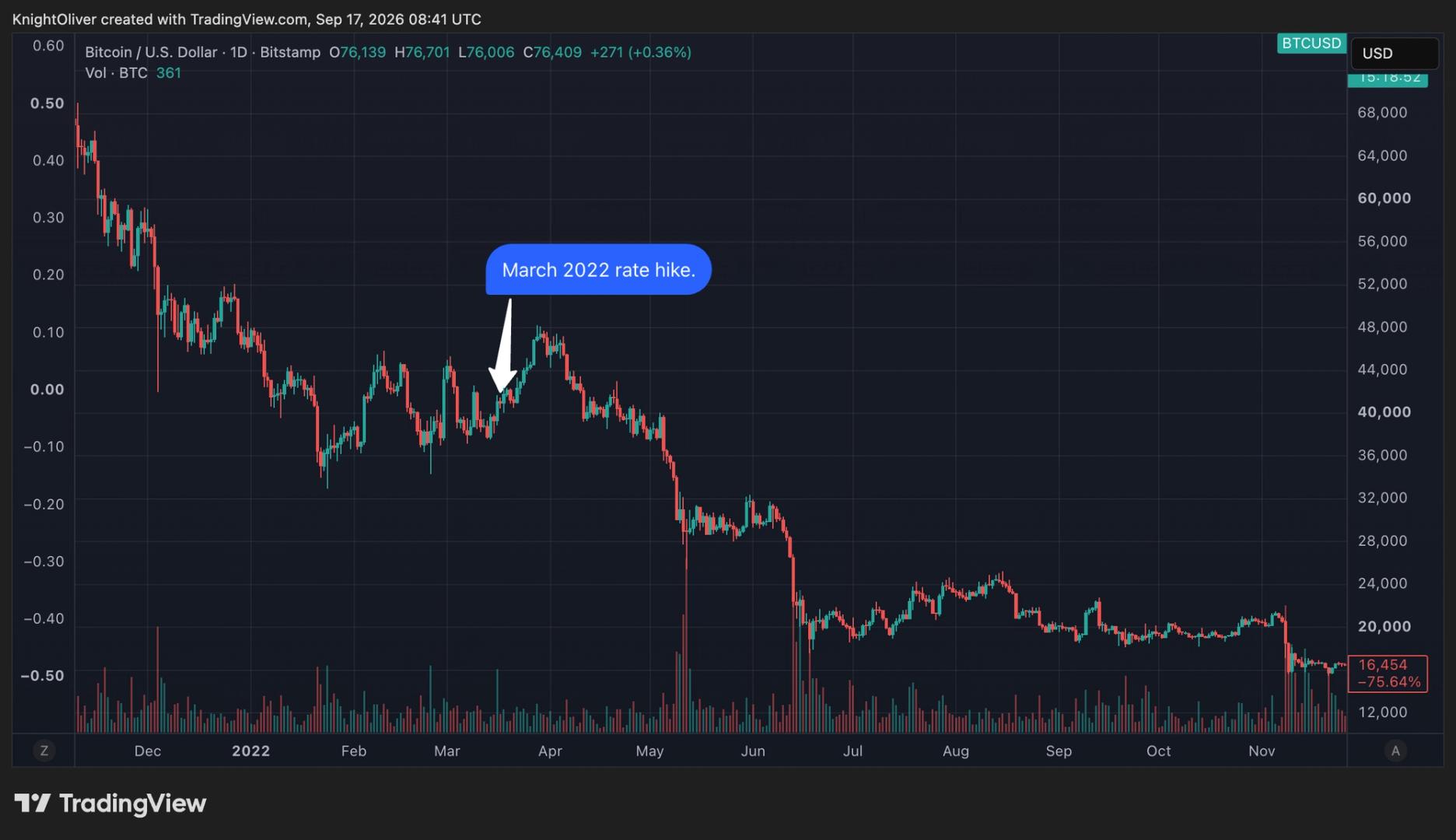
The cryptocurrency market, particularly Bitcoin, is currently navigating a period of significant pressure, with some analysts drawing parallels to the challenging environment of 2022. This renewed scrutiny comes as the Federal Reserve has indicated a resumption of its interest rate hiking cycle, a move that historically tends to weigh on risk assets like cryptocurrencies.
In 2022, Bitcoin experienced a substantial decline in value, largely influenced by a tightening monetary policy from central banks globally, including the Fed. The expectation of higher borrowing costs typically reduces investor appetite for speculative assets, leading to capital outflows from markets perceived as higher risk. This dynamic often affects retail forex and CFD traders who engage with crypto-related instruments.
Market participants are now closely monitoring whether the current economic climate, marked by persistent inflation and a hawkish Fed stance, will mirror the sustained downtrend observed two years ago. The resilience of Bitcoin's price in the face of these macroeconomic headwinds will be a key indicator for the broader digital asset space.
Macroeconomic Headwinds and Crypto Performance
The relationship between central bank policy and cryptocurrency valuations is a critical one. When interest rates rise, the cost of capital increases, making it more expensive for businesses and consumers to borrow and invest. This environment often encourages a shift towards less volatile, interest-bearing assets, moving away from assets that do not generate yield, such as Bitcoin.
Furthermore, the U.S. Dollar Index (DXY) often strengthens during periods of Fed tightening, as higher interest rates make dollar-denominated assets more attractive. A stronger dollar can exert additional downward pressure on commodities and other assets priced in dollars, including cryptocurrencies, making them more expensive for international buyers. Retail traders often monitor DXY movements as they can impact a wide range of markets, including major forex pairs and indirectly, crypto CFDs.
As the Federal Reserve continues to address inflation through monetary policy adjustments, the cryptocurrency market is likely to remain sensitive to these developments. Investors and traders will be watching for signs of economic stability or further policy shifts that could influence the trajectory of digital assets in the coming months.
📰 Based on reporting from: CoinDesk →