
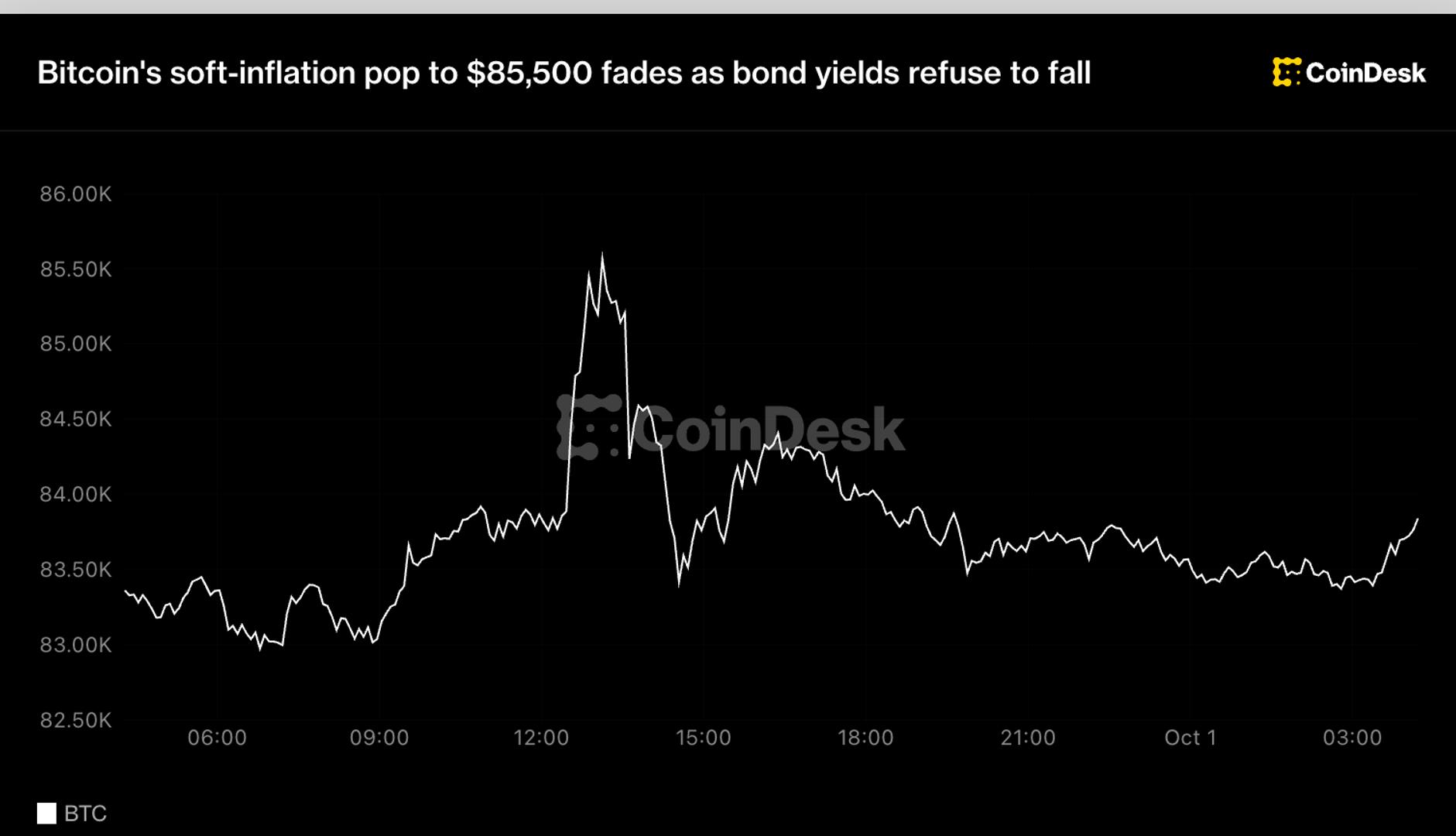
Following a period of notable upward movement that saw Bitcoin approach the $85,500 mark, the cryptocurrency experienced a partial retracement. This initial ascent was largely attributed to the release of US inflation data, which indicated a moderation in price increases. Lower inflation figures often lead market participants to anticipate a less aggressive stance from central banks regarding interest rate hikes, which can be supportive for risk assets like cryptocurrencies.
However, the momentum behind Bitcoin's rally appears to have stalled as US Treasury bond yields have demonstrated resilience, resisting a significant decline. Typically, falling bond yields can make alternative investments more attractive, but their current stability suggests a different market dynamic at play. The cryptocurrency had reached a peak around $85,500 following the inflation report, but subsequently pulled back, trading closer to $82,000 in the aftermath.
For retail forex, CFD, and crypto traders, understanding the interplay between macroeconomic data, bond yields, and cryptocurrency prices is crucial. Shifts in inflation expectations and the corresponding reaction in government bond markets can significantly influence risk sentiment across various asset classes, impacting trading opportunities and risk management strategies.
Macroeconomic Factors Influence Crypto Performance
The sustained level of US Treasury yields indicates that the market might be pricing in a different outlook for interest rates or long-term economic growth than initially suggested by the softer inflation data alone. Higher or stable bond yields can increase the attractiveness of traditional fixed-income investments, potentially drawing capital away from more volatile assets like Bitcoin. This dynamic highlights how the broader financial landscape, particularly in major economies, can exert considerable influence on the cryptocurrency market.
Analysts are now closely observing upcoming economic indicators and central bank communications for further clues on the trajectory of interest rates and bond yields. The ability of Bitcoin to sustain upward momentum or consolidate at higher levels will likely depend on a more definitive shift in these underlying macroeconomic conditions.
In summary, while softer inflation provided a temporary boost, Bitcoin's price action underscores the continued influence of broader financial market conditions, particularly the behavior of government bond yields, on cryptocurrency valuations.
📰 Based on reporting from: CoinDesk →