
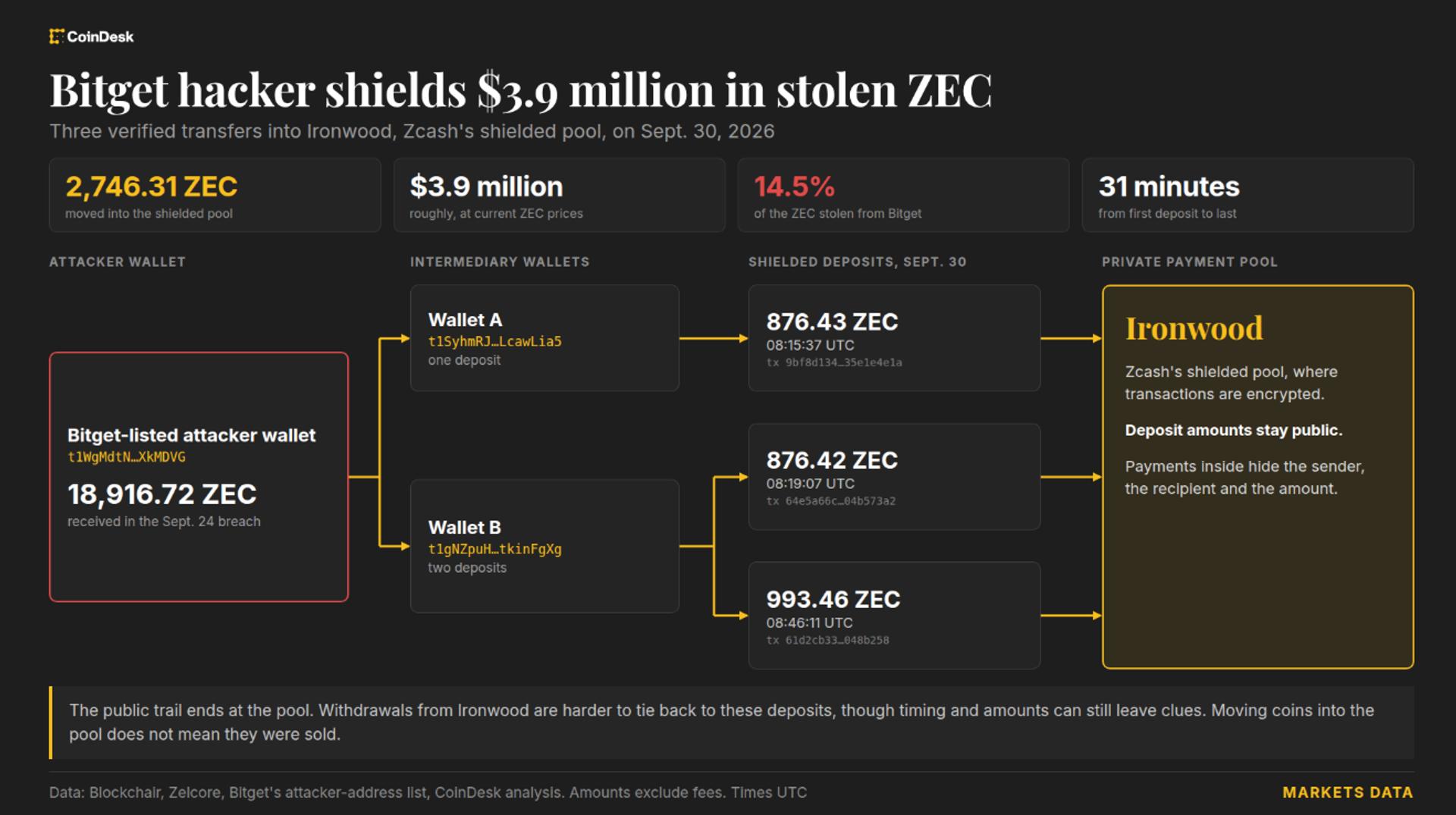
Funds amounting to approximately $4 million, reportedly originating from a security incident at cryptocurrency exchange Bitget, have been transferred into Zcash's shielded pool. This move significantly enhances the anonymity of the digital assets, making their subsequent tracking and identification substantially more challenging for blockchain analytics firms and law enforcement agencies.
The breach, which Bitget publicly acknowledged and attributed to a compromise of a hot wallet, saw various cryptocurrencies siphoned off. While Bitget has stated its commitment to fully compensating affected users and has initiated a recovery process, the transfer of a portion of the stolen funds into a privacy-focused cryptocurrency network represents a common tactic employed by cybercriminals to obscure their financial trails.
For retail forex and CFD traders who might also engage with cryptocurrencies, understanding the mechanisms of privacy coins like Zcash is important for comprehending market dynamics and regulatory discussions surrounding digital asset traceability. Such events underscore the ongoing challenges in securing digital assets and the evolving methods used to launder illicit gains within the crypto ecosystem.
Implications for Fund Tracing
- Enhanced Anonymity: Zcash's shielded transactions obscure sender, receiver, and transaction amounts, unlike transparent blockchains such as Bitcoin.
- Increased Difficulty for Investigators: The use of privacy features makes it significantly harder for forensic analysis tools to follow the flow of funds once they enter the shielded pool.
- Potential for Further Obfuscation: Funds within shielded pools can be further fragmented or moved to other privacy-enhancing services, adding layers of complexity to tracing efforts.
- Regulatory Scrutiny: Incidents involving privacy coins often intensify regulatory discussions regarding anti-money laundering (AML) and know-your-customer (KYC) compliance within the crypto space.
The movement of these funds highlights the persistent security risks associated with cryptocurrency holdings and the sophisticated techniques employed by perpetrators to evade detection. While exchanges continuously strive to bolster their security protocols, the nature of decentralized and privacy-centric digital assets presents unique challenges for asset recovery and illicit finance combatting efforts.
📰 Based on reporting from: CoinDesk →