
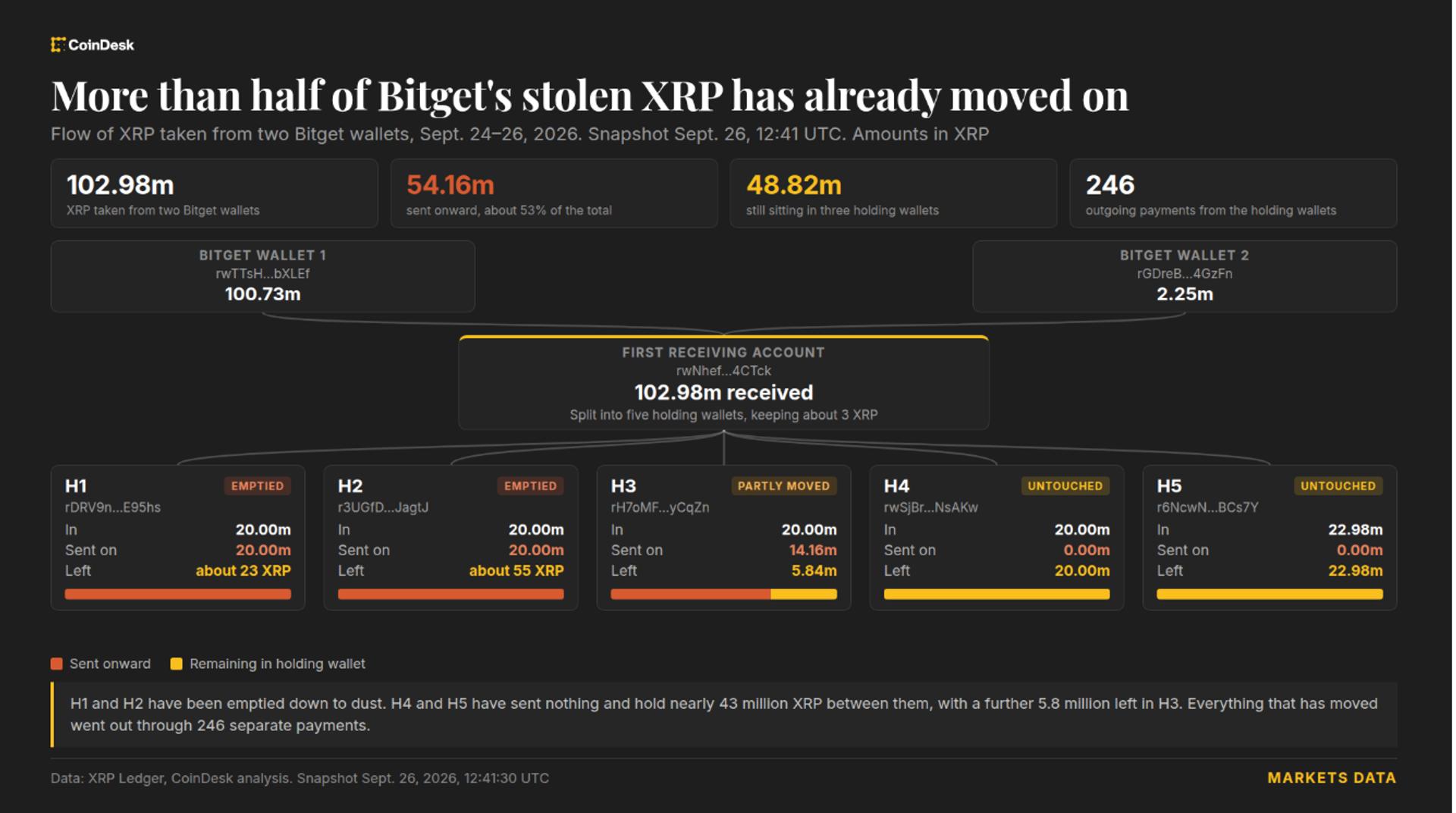
Funds valued at approximately $83 million, consisting of XRP tokens, have been transferred by an individual associated with the Bitget exchange security breach. The movement of these digital assets has drawn attention due to the reported inability of Ripple Labs, the company behind the XRP ledger, to freeze the compromised funds. This incident highlights specific characteristics of decentralized ledger technologies and their implications for asset recovery.
The XRP Ledger, unlike some other blockchain networks, incorporates a feature allowing designated issuers to freeze assets under certain conditions, primarily for regulatory compliance or in cases of theft if the issuer controls the asset. However, this functionality typically applies to issued tokens (IOUs) on the ledger, not to native XRP itself once it's in circulation and not held by a controlled gateway. The current situation suggests the transferred XRP falls outside the scope of assets Ripple can unilaterally freeze, emphasizing the decentralized nature of native cryptocurrency holdings.
For retail forex, CFD, and crypto traders, understanding the immutability and recovery limitations of various cryptocurrencies is crucial. The ability or inability of a protocol's developer or issuer to freeze funds can significantly impact the perceived security and risk profile of an asset, particularly in the event of exchange hacks or unauthorized transfers.
Understanding XRP Ledger Mechanics
- Native XRP: Once native XRP is transacted on the ledger, its ownership is recorded on the blockchain. Ripple Labs does not possess direct control to freeze these native tokens from individual wallets.
- Issued Assets/IOUs: The freezing mechanism on the XRP Ledger is primarily designed for assets issued by gateways or entities on the ledger, allowing them to freeze their own issued tokens in specific circumstances.
- Decentralization Implications: The incident underscores that while some centralized elements may exist within a cryptocurrency's ecosystem, the core native asset often operates under principles of decentralization, making unilateral asset recovery by a central entity challenging.
The movement of the stolen XRP funds serves as a reminder of the inherent characteristics of different digital assets and the varying degrees of control that can be exerted over them by their creators or other entities. The reported inability to freeze these particular funds reflects the design principles of native cryptocurrencies on decentralized ledgers.
📰 Based on reporting from: CoinDesk →